The South London Trades Business Owner's Guide to Handling a Bad Review
Every trades business eventually gets one. Here's exactly how to respond to a negative Google review — calmly, professionally, and in a way that often builds more trust than it damages.
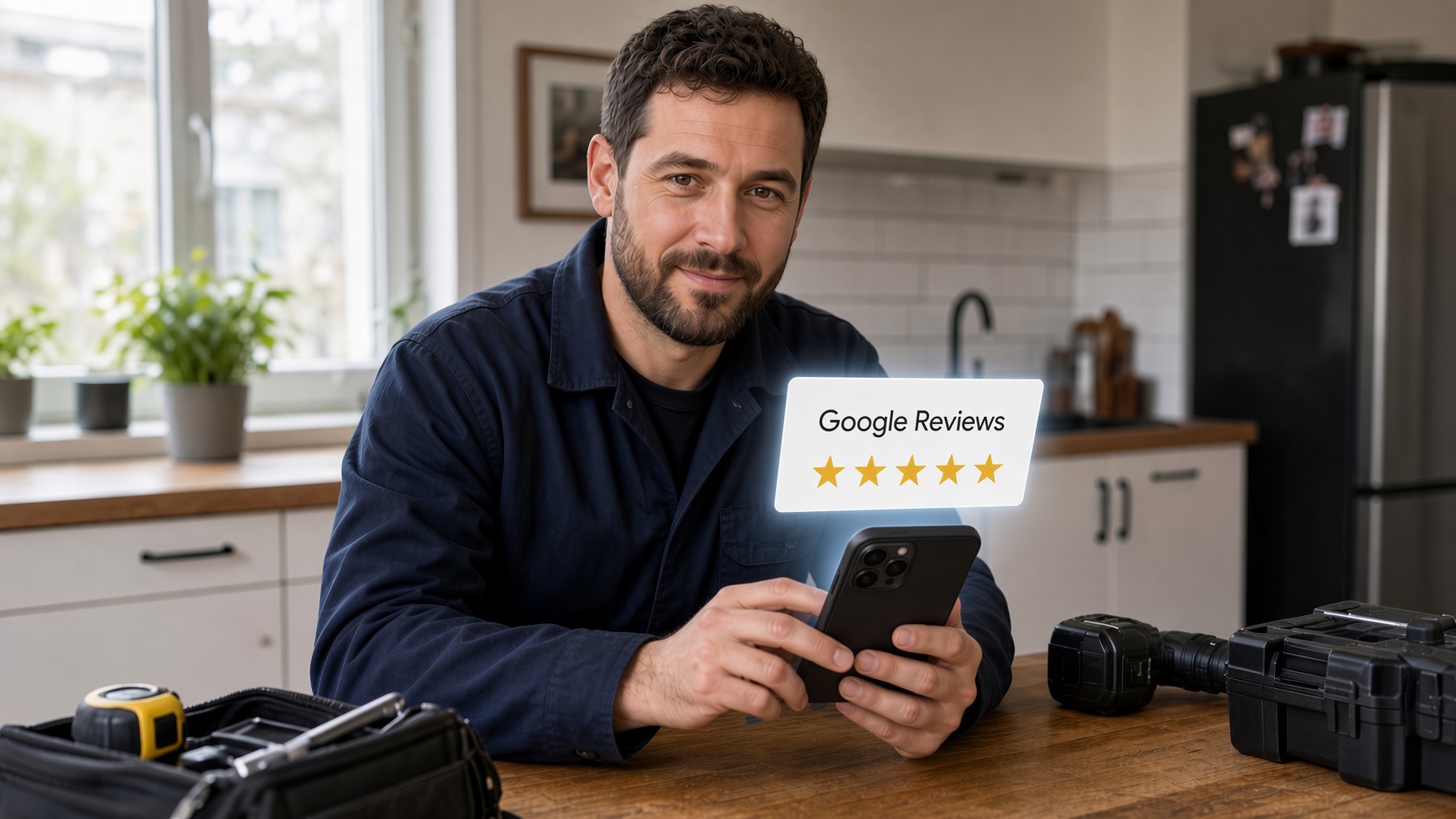
It happens to every trades business eventually — no matter how good the work, how careful the process, or how happy 99% of clients are. A negative review appears on your Google Business Profile, and for a moment, it feels like a genuine crisis.
Here's the good news: how you respond matters far more than the review itself. A well-handled negative review can actually build more trust with prospective clients than a page of generic five-star ratings. Here's exactly how to do it.
Why a bad review isn't the disaster it feels like
When you have five reviews total, one negative review feels catastrophic — it drags your average rating down significantly and stands out starkly. When you have forty reviews, the same negative review barely moves the needle and gets diluted by genuine positive feedback around it.
This is one of the strongest arguments for consistently gathering reviews rather than only thinking about them when something goes wrong: a healthy volume of reviews is your best protection against any single bad one having outsized impact.
The first 24 hours matter most
Respond promptly — ideally within 24 to 48 hours. A quick, calm response signals that you're an active, engaged business owner who takes feedback seriously. A review left unanswered for weeks signals the opposite, regardless of how fair or unfair the original complaint was.
Before responding, resist the urge to react emotionally. Read the review, step away for a few minutes if needed, and come back to write a response with a clear head.
The response framework that works
A professional response to a negative review follows a simple, consistent structure:
- Acknowledge without being defensive — 'Thank you for taking the time to share this feedback' rather than immediately explaining why they're wrong
- Show you take it seriously — 'We're sorry to hear the experience didn't meet the standard we aim for'
- Briefly and calmly address the specific issue if appropriate — without getting into a detailed public argument about facts
- Offer to resolve it offline — 'We'd welcome the chance to discuss this directly and put things right — please give us a call on [number]'
- Keep it short — a long, defensive response reads worse than a brief, professional one
Here's an example of what this looks like in practice: 'Thank you for your feedback. We're sorry to hear the finish wasn't quite what you expected — we always aim for a high standard and take this seriously. We'd really welcome the chance to discuss this directly and put things right. Please call us on [number] at your convenience.'
What not to do
A few responses reliably make a bad situation worse:
- Arguing publicly about the facts of the job — even if you're completely right, a public back-and-forth makes any business look unprofessional to everyone else reading it
- Getting personal or defensive — attacking the reviewer's credibility or character always reflects worse on you than on them
- Ignoring it entirely — silence reads as either not caring or having something to hide
- Offering a refund or discount publicly in the comments — resolve specifics privately, not in the public review thread
When a review is unfair or from the wrong business
Sometimes a review genuinely doesn't belong to you — wrong business, mistaken identity, or clearly fake. In these cases, you can report it to Google directly through your Business Profile dashboard for review and potential removal. This process can take time, so it's still worth posting a brief, calm public response in the meantime: 'We don't have any record of this job — if you believe this review was left for the wrong business, please get in touch so we can look into it.'
Turning a negative review into a trust signal
Prospective clients reading your reviews aren't expecting perfection — they're looking for how you handle imperfection. A single calm, professional response to a negative review, sitting among a strong collection of positive ones, often reassures homeowners more than an unbroken run of five stars, which can occasionally feel too good to be true.
The goal isn't to avoid ever getting a bad review — it's nearly impossible to run a trades business for years without one. The goal is to make sure that when it happens, your response demonstrates exactly the kind of professionalism that makes someone confident hiring you.
Building resilience through volume
The best long-term protection against any single bad review is a consistent, ongoing flow of new positive reviews. This is why review management should be a continuous habit, not a one-off task — the businesses with the strongest, most resilient online reputation are the ones who never stop asking happy clients to leave a review, rather than only thinking about it after something goes wrong.
At OM Marketing, review management — including monitoring, response drafting and ongoing review generation — is built into every package we offer. If you'd like help building a stronger, more resilient review profile, book a free 20-minute audit.
Want help managing your reviews and reputation?
Book a free 20-minute audit — we'll look at your current review profile and show you exactly how to strengthen it.