
How to Write a Quote That Wins the Job: A Simple Guide for South London Trades
Most South London tradespeople lose jobs not because their price is wrong — but because of how the quote is presented. Here's a simple, practical guide to writing quotes that convert.
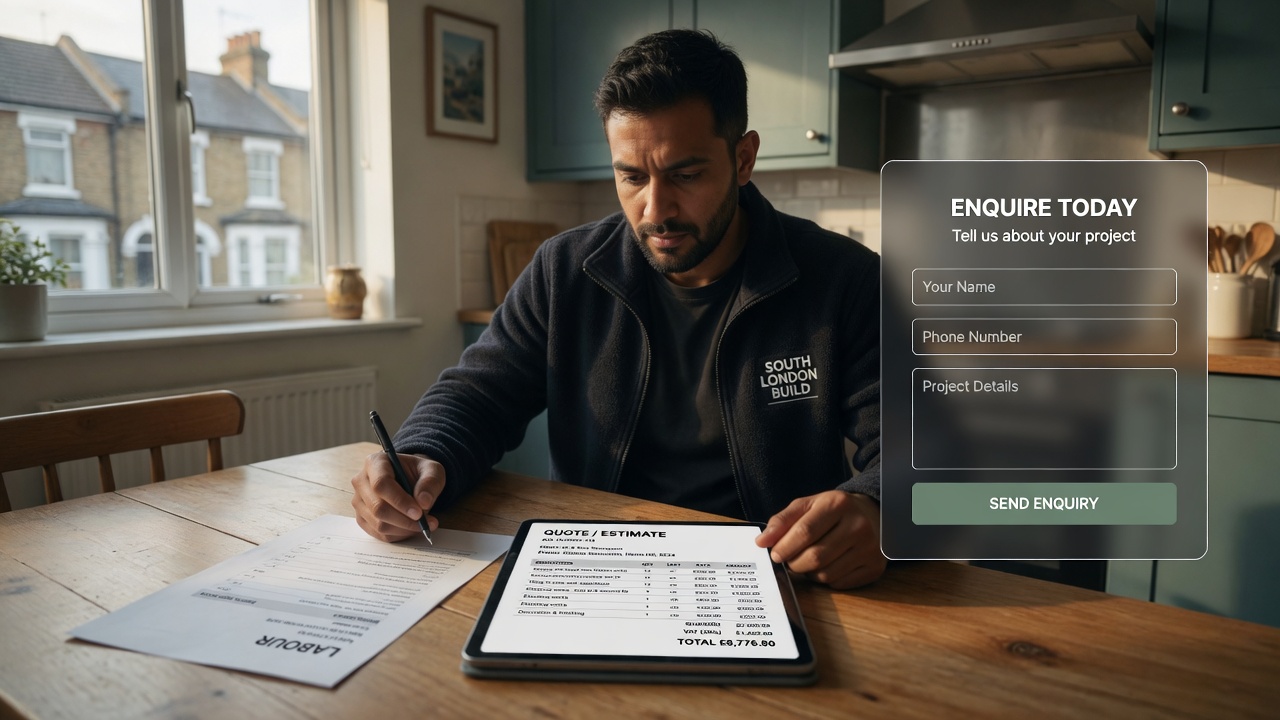
Here's something most tradespeople don't realise: you can do everything right — show up on time, be professional, price the job accurately — and still lose it to a competitor whose quote simply looked better on paper.
The quote is often the last thing standing between you and the job. And for most South London trades businesses, it's the part of the process that gets the least attention.
This guide covers what actually goes into a quote that wins — and what the most successful trades businesses in South London do differently.
Why quotes lose jobs
Before we get into what works, it's worth understanding why quotes fail. In our experience working with South London trades businesses, quotes lose jobs for three main reasons:
- They arrive too late — a homeowner who gets three quotes and hears back from two within 24 hours will often make a decision before the third arrives
- They look unprofessional — a quote written in a text message or on a generic Word template signals that the business itself might be disorganised
- They don't explain value — a number without context forces the homeowner to compare on price alone, which is a race to the bottom
The good news is that all three of these are fixable — and fixing them doesn't require spending money, just changing habits.
Speed matters more than you think
The single biggest thing you can do to win more jobs from your quotes is send them faster. Most homeowners contact 3–5 tradespeople at once. The first professional quote to arrive sets the benchmark — every quote after it is compared to that one.
Aim to send your quote within 24 hours of the site visit. If you can't put together the full quote that quickly, send a holding message: 'Great to meet you today — I'll have your full quote over by tomorrow afternoon.' That simple message alone keeps you front of mind and signals professionalism.
What a winning quote looks like
A professional quote for a South London trades business doesn't need to be elaborate — but it does need to cover the following:
- Your business name, logo and contact details at the top
- The client's name and address
- The date the quote was issued and how long it's valid for (14–30 days is standard)
- A clear description of the work — specific enough that the client knows exactly what's included
- What's NOT included — this protects you from scope creep later
- The total price, broken down by stage or element where helpful
- Payment terms — deposit amount, stage payments, final payment due date
- A simple next step — 'To proceed, please reply to confirm and I'll send over the deposit invoice'
The language that wins
The way you describe the work in your quote matters as much as the price. Most quotes are written from the tradesperson's perspective — materials, labour, phases. The quotes that win are written from the homeowner's perspective.
Compare these two descriptions of the same kitchen fitting job:
'Supply and fit kitchen units, worktops and appliances. Electrical and plumbing first fix and second fix. Tiling to splashback area.'
vs.
'We'll take care of everything from start to finish — removing your old kitchen, fitting all new units, worktops and appliances, and completing all the plumbing and electrical work. We'll also tile your splashback and leave the space clean and ready to use. You won't need to coordinate any other trades.'
Same scope. Completely different impression. The second version answers the question the homeowner is actually asking: 'Will this be stressful, and can I trust these people to handle it?'
The follow-up that converts
Most trades businesses send a quote and wait. The ones that win more jobs follow up.
A simple message 3–5 days after sending the quote — 'Hi [name], just checking you received the quote okay and wondering if you have any questions' — converts a meaningful percentage of undecided homeowners. It shows you're interested in the job without being pushy.
If they say they're still deciding, ask if there's anything on the quote they'd like to talk through. This often surfaces an objection you can address — and frequently results in a booking.
Tools that make this easier
If you're still writing quotes in Word or sending prices via text, it's worth investing in a simple quoting tool. Options like Tradify, Jobber or even a well-designed Google Docs template can make your quotes look professional in minutes rather than hours.
The investment in a proper quoting process — in time, tools and presentation — pays back every time a homeowner chooses you over a cheaper competitor because your quote gave them more confidence.
The bigger picture
A great quote is part of a wider client experience that starts the moment someone finds you on Google. If your Google presence, website and reviews are strong, the homeowner already trusts you before they meet you. Your quote is just the confirmation of that trust.
At OM Marketing, we help South London trades businesses build that trust online — so by the time you're writing the quote, you're already the preferred choice.
Want more of your quotes to turn into jobs?
Book a free 20-minute audit — we'll look at your full online presence and show you how to turn more enquiries into paying clients.