Home improvement in Croydon: what local trades need to know
Four housing markets in one borough
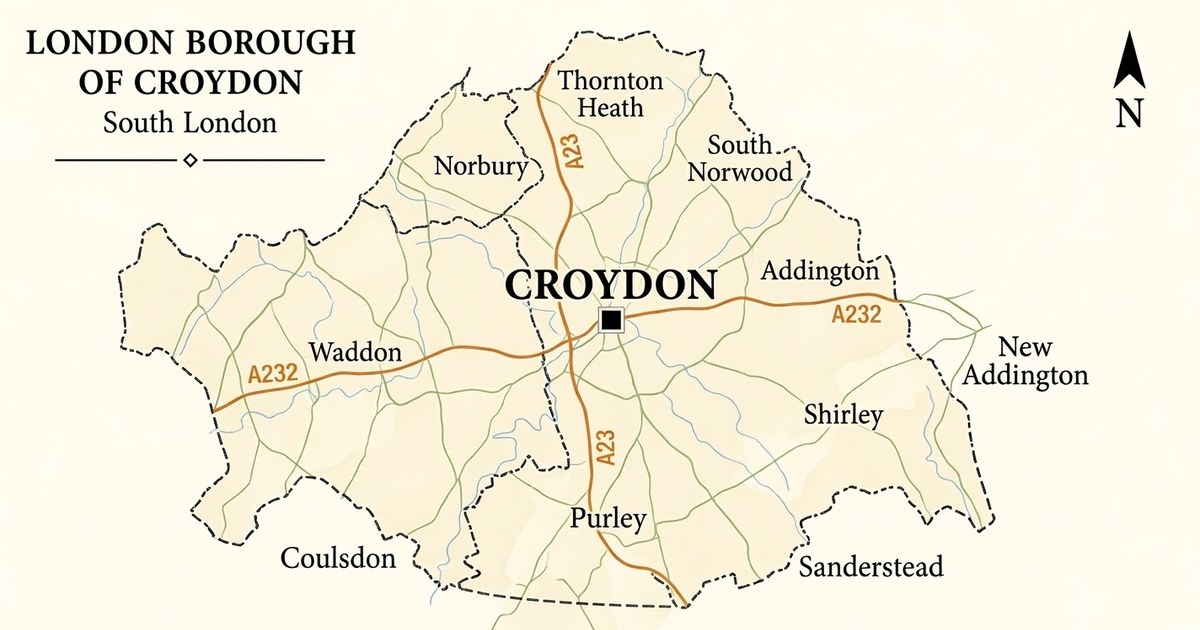
Croydon's housing is more varied than most South London boroughs. Upper Norwood and Crystal Palace hold Victorian villas, tall and generously proportioned, many long since divided or heavily altered. Thornton Heath and Selhurst are Edwardian terrace country. Purley and Coulsdon are dominated by 1930s semi-detached homes. Central Croydon adds a large layer of post-war housing built to different standards again. Each type behaves differently once you open the floor, so a trade who treats Croydon as one market usually quotes badly.
Victorian villas in Upper Norwood and Crystal Palace
These houses are large, tall and rarely still in their original layout. Many were divided into flats or maisonettes and partly reunited, which leaves heating and water systems that only make sense as a history lesson. Typical questions are getting decent pressure to a top-floor bathroom and whether an old cylinder arrangement is worth keeping. Owners usually know the house is complicated and are wary of anyone who quotes without looking properly.
Edwardian terraces and 1930s semis
Thornton Heath and Selhurst terraces are long and narrow, with rear returns, awkward bathroom positions and neighbours on both sides to think about during noisy work. In Purley and Coulsdon, 1930s semis bring different jobs: original pipe routes under suspended floors, kitchens and bathrooms that have often been moved once already, and owners who tend to want a full bathroom refit rather than a repair.
Purley and the Webb Estate
Purley sits in the London Borough of Croydon but feels semi-rural and close to Surrey. The Webb Estate covers about 260 acres west of the town centre. William Webb, a local estate agent, bought the site in 1888 and developed it around his Garden First ideas, planting trees and shrubs before the first houses went up. Upper Woodcote House, his own home, was finished in 1903. The Webb Estate became a conservation area in June 1983, and the Upper Woodcote Village conservation area was designated earlier, in November 1973. The houses are large and varied, including neo-Georgian and half-timbered examples, so the work tends to be bigger: long pipe runs, several bathrooms and larger heating systems. Elsewhere in Purley the work is the regular stream of boilers, leaks and bathroom updates in family homes and flats on the slopes of the North Downs.
Older wiring and a large rented sector
In South Croydon, Addiscombe and Selhurst, much of the older housing still runs on original or 1960s wiring, and many older homes still rely on outdated fuse boxes without RCD protection. Thornton Heath and Norbury have a significant number of HMOs and converted flats, where older circuits carry more load than they were designed for and landlords need regular EICR testing. Electricians here serve two different customers: homeowners facing a rewire or consumer unit upgrade, and landlords who want fast certificates and clear quotes.
Conservation areas and planning
Croydon Council currently lists 21 conservation areas. Article 4 Directions, which add restrictions on permitted development, are in place in three of them: Chatsworth Road, The Waldrons and Kenley Aerodrome. Across all conservation areas, work such as windows, roofs and extensions can face extra controls, so a good local trade checks the address before quoting.
What we found
We went and did the research ourselves. We checked live Google Keyword Planner ranges for nine trades across 20+ South London and Surrey boroughs. In Croydon, plumber searches sit at around 5,000 a month, roughly ten times electrician, roofer, builder, kitchen fitter or loft conversion searches, which each sit at around 500. In Purley, plumber searches sit at around 500 a month, roughly ten times builder, electrician or loft conversion searches at around 50.