Part P, NICEIC and Trust: How Electricians Should Use Their Accreditations to Win Work Online
Most electricians list their qualifications like a CV. Homeowners aren't hiring a CV — they're hiring peace of mind. Here's how to present Part P, NICEIC and your other credentials so they actually win you jobs.
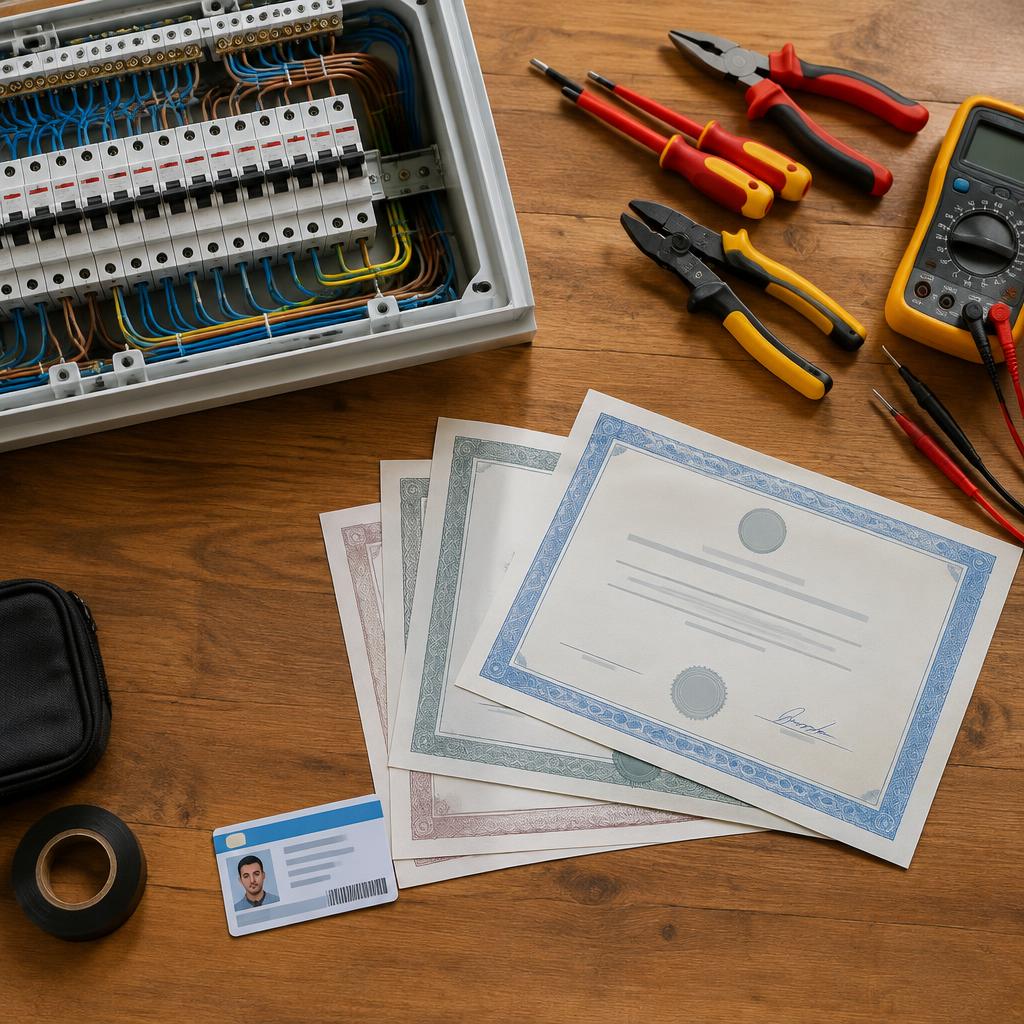
Ask an electrician why a customer should hire them and the answer comes quickly: Part P registered, NICEIC certified, years on the tools, proper certification on every job. Ask the same electrician's website why a customer should hire them, and more often than not the answer is a small line of text in the footer — if it appears at all.
That gap is worth money. Homeowner surveys have run the same way for years: when people choose a tradesperson for electrical work, safety and legitimacy sit at or near the top of the list, ahead of price. Your accreditations are the proof. The problem is almost never that electricians lack them — it's that the credentials are stored like qualifications rather than presented like reassurance.
Accreditations don't create demand. They convert it.
This is the honest starting point. Being NICEIC registered doesn't make anyone search for an electrician — the demand has to come from somewhere else: a recommendation, a Google search, your van, a directory listing. What accreditation decides is what happens in the ten seconds after someone finds you. Two electricians appear side by side in a search; one shows a registration number and recent certification, the other shows a logo and a phone number. Price stops being the deciding factor for a meaningful share of those customers.
So the work isn't 'get more qualified' — you already are. It's putting the proof where decisions happen.
Where the proof should actually sit
- Above the fold on your homepage — registration body and number visible without scrolling, next to the phone number, not three pages deep.
- On every service page — someone landing on your EV charger page wants to know you're certified for exactly that work, not that you're an electrician generally.
- In your Google Business Profile — registration in the business description and in photos of real certificates on real jobs.
- In your quotes — a line with your registration number and 'certificate issued on completion' turns a piece of paper into a trust document.
- In your email signature and review requests — trust signals compound when they're consistent everywhere.
Translate, don't list
Homeowners don't know what Part P means. They know what it means for them: the work is legal, certified, and won't cause problems when they sell the house. The electricians who convert best online translate rather than list. 'All work certified and registered — the paperwork your solicitor will ask for when you sell' does more than 'Part P compliant' ever will. Same fact, different framing.
The same goes for NICEIC. 'NICEIC registered electrician' is fine. 'NICEIC registered — independently assessed every year, so you're not taking our word for our own work' is better, because it explains why the badge matters to someone who doesn't already know.
One honest caveat
Accreditations are a conversion tool, not a demand tool — and no credential fixes a website that's hard to use on a phone, a Google profile with no recent reviews, or a quote process that takes a week. If those foundations are missing, polish the proof last. If they're in place, the proof is often the last thing standing between a visitor and an enquiry.
We work with South London electricians on exactly this: making sure the trust you've earned on the tools is visible at the moment someone's deciding. Book a free 20-minute audit — we'll show you where your credentials currently sit and what moving them would be worth.
Turning trust into enquiries.
We build websites for South London trades that put your credentials where decisions happen. Book a free 20-minute audit and we'll show you what your current site is doing with the trust you've already earned.