Trade work in Dulwich: homeowners, estate rules and London Clay
Dulwich is a homeowners' market with an extra layer of rules. More than half of homes are owner occupied, and over 4,000 properties sit in a private planning scheme run by the Dulwich Estate. This guide sets out what that means for plumbers, electricians, roofers, builders and every other trade.
What Dulwich searches for
Google puts plumber and electrician searches in Dulwich in its 100 to 1,000 a month range. So do searches for "plumber East Dulwich" and "Dulwich roofing contractors". General searches for roofers, builders, loft conversions and heating engineers are lower, at 10 to 100. Our free audit checks which of them already find you.
Mostly owners
Of the 16,692 households in the four wards that carry Dulwich's name (Dulwich Hill, Dulwich Village and Dulwich Wood in Southwark, and West Dulwich in Lambeth), 53.9% are owner occupied, 24.1% rent privately and 21.0% rent socially. Owners choose on trust, so reviews and photos of finished local jobs matter, and we can set up your Google profile and website to show them.
Gas heating leads
79.2% of homes in those wards heat with mains gas only and 6.9% with electricity only, so most heating work here is on gas boilers.
The Dulwich Estate
Just over 4,000 Dulwich properties are in the Dulwich Estate's Scheme of Management, a planning system set up under the Leasehold Reform Act 1967 to protect the area's character. The Scheme grants licences for development work, and for the Estate's leaseholders, jobs such as replacing windows or fitting a new boiler flue need a licence before work starts. Southwark's conservation areas include Dulwich Village, Dulwich Wood and the Sunray Estate as well. Check whether a property is in the Scheme before you quote. Knowing how it works is a real advantage, and we can make that experience clear on your website.
Ground conditions
Southwark's flood risk assessment notes that near Dulwich and Crystal Palace, the Claygate Member lies over the London Clay on higher ground, and Lambeth's residential basement study records London Clay at the surface on the higher ground of Dulwich and West Norwood. Ground like this moves with the weather, drying and shrinking in summer and swelling in winter, which can lead to subsidence. Homeowners notice a trade who knows this ground, and we can put that knowledge on your website.
Where the work is
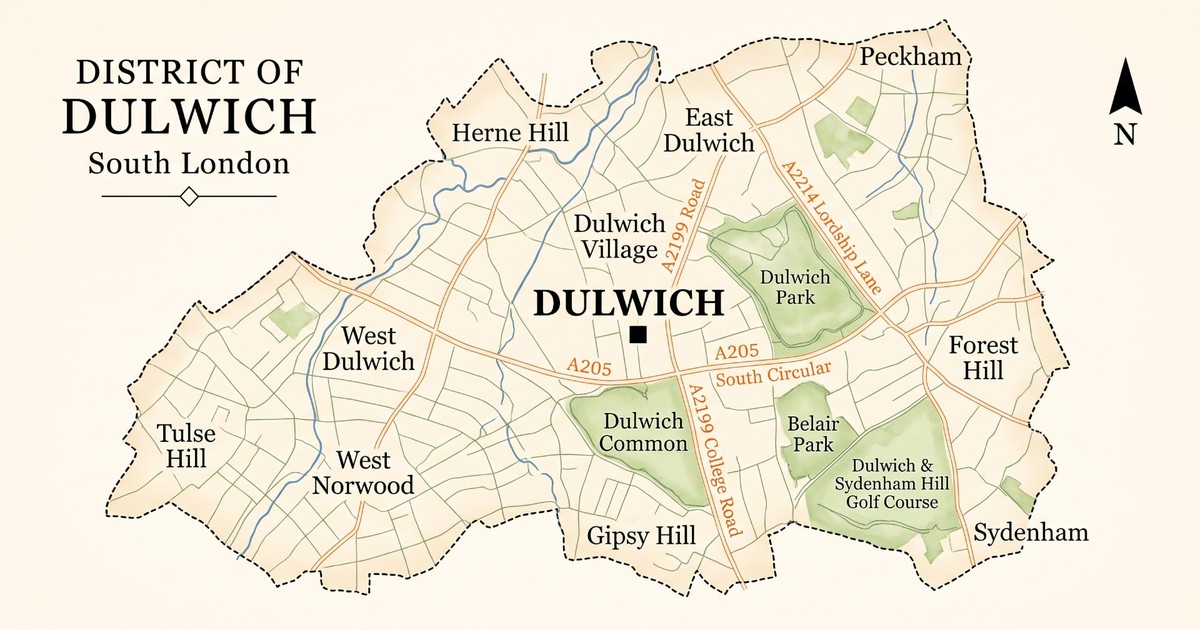
SE21 (Dulwich, Dulwich Village, West Dulwich) and SE22 (East Dulwich).
Getting found here
Dulwich homeowners compare carefully, and East Dulwich is searched in its own right, so both names belong on your website and Google listing. We can write those pages, look after the listing and target ads at SE21 and SE22, leaving you free to do the work. Start with a free audit of how you appear in Dulwich.
Working in Dulwich, or want to be?
Get a free audit and we'll show you how you're showing up there.
Sources
- Census 2021, Dulwich Hill ward
- Census 2021, Dulwich Village ward
- Census 2021, Dulwich Wood ward
- Census 2021, West Dulwich ward
- The Dulwich Estate, about the Scheme of Management (2024)
- The Dulwich Estate, alterations to your home
- Southwark conservation areas
- Southwark Strategic Flood Risk Assessment
- Lambeth residential basement study
- British Geological Survey on clay shrink-swell