
How to Get More Extension and Loft Conversion Leads in London
Extensions and loft conversions are the highest-value domestic jobs in London — and the most competitive to win. Here's the acquisition strategy that puts builders in front of homeowners with real budgets and real plans.
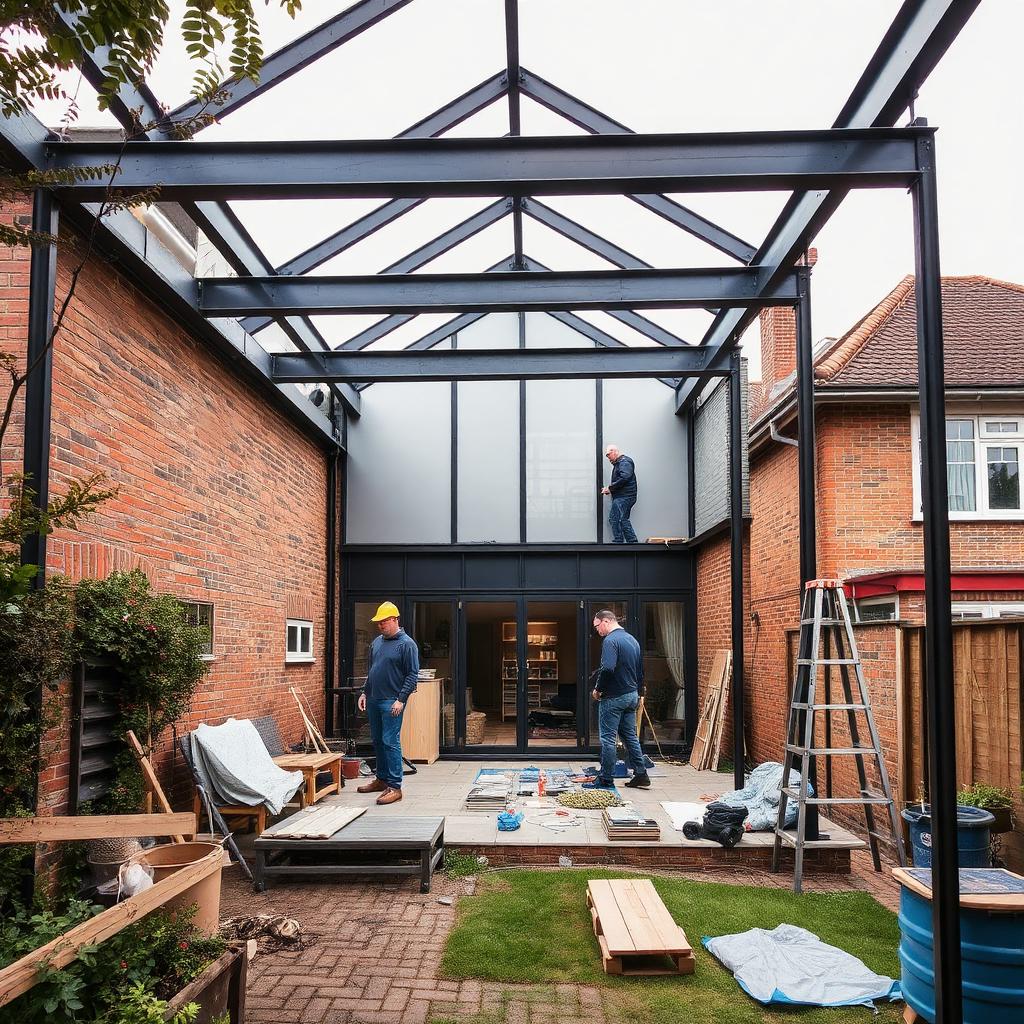
A single extension or loft conversion is worth what twenty bathroom refits are worth. Yet most London builders market themselves exactly the same way for both — a van, a Checkatrade profile and hope. The builders winning the £50,000–£150,000 projects consistently are doing something different, and it starts with understanding how those homeowners actually choose.
Understand the long sales cycle
Nobody impulse-buys an extension. The typical journey from 'we should extend' to signing a contract is six to eighteen months. It usually runs: daydreaming and Pinterest, then cost research, then an architect or architectural designer, then planning, then — finally — builder shortlists. Most builders only try to appear at the very last stage. The smart ones get visible at the research stage, where competition is far lower.
Own the research-stage searches
Before a homeowner ever searches 'builder near me', they search things like 'side return extension cost London', 'loft conversion permitted development', 'do I need planning permission for a dormer'. Each of those searches is an opportunity. A builder whose website has genuinely helpful guides answering these questions gets found months before the shortlist stage — and by the time the homeowner is ready for quotes, that builder is already the familiar, trusted name.
This is also content your competitors largely aren't producing, which makes it far easier to rank for than 'builder London' — a keyword you'll struggle to win for years.
Build relationships with architects and designers
The single highest-converting lead source for large residential projects isn't Google at all — it's architects and architectural designers. When their drawings get planning approval, the client asks: 'Do you know any good builders?' Being the answer to that question, across three or four local practices, can fill a programme on its own. That means deliberate relationship-building: introduce yourself, show your portfolio, be easy to work with, and make them look good in front of their clients.
Make your portfolio do the selling
For high-value work, your portfolio is your salesperson. Homeowners committing six figures want to see projects like theirs — similar property types, similar scale, similar finish. That means professional-quality photos of completed extensions and lofts, organised by project type, with a sentence or two on scope and location. 'Rear extension, Edwardian terrace, Dulwich' is infinitely more persuasive to a Dulwich homeowner than a generic gallery.
Use Google Ads surgically
Paid search works extremely well for big projects, but only with tight targeting. Broad campaigns on 'builders London' burn budget on small-job searchers. Campaigns built around high-intent phrases — 'extension builders [borough]', 'loft conversion company [area]' — cost more per click but attract people with a real project, real budget and real timeline. Paired with a landing page that shows relevant case studies and credible reviews, the cost-per-signed-contract maths work heavily in your favour.
The compounding effect
None of these channels peaks immediately, but they compound. Every completed project becomes portfolio proof, every happy client becomes reviews and referrals, every guide you publish strengthens the rankings that put you in front of next season's planners. Twelve months of consistency here is what separates the builders queuing for Checkatrade jobs from the ones with a waiting list.
Want bigger projects, not more small jobs?
Book a free 20-minute audit — we'll show you exactly how builders in your borough are being found for extension and loft work, and where the gaps are that you can take.